Do you picture morning coffee above a glassy bay or toes-in-the-sand steps from your back door? In Orleans, both experiences are possible, and the difference comes down to true waterfront versus elevated waterview. Choosing between them shapes your daily life, long-term costs, and resale strategy. This guide breaks down what each option means in Orleans, how they live, and the key risks and documents to review before you tour. Let’s dive in.
What counts as waterfront in Orleans?
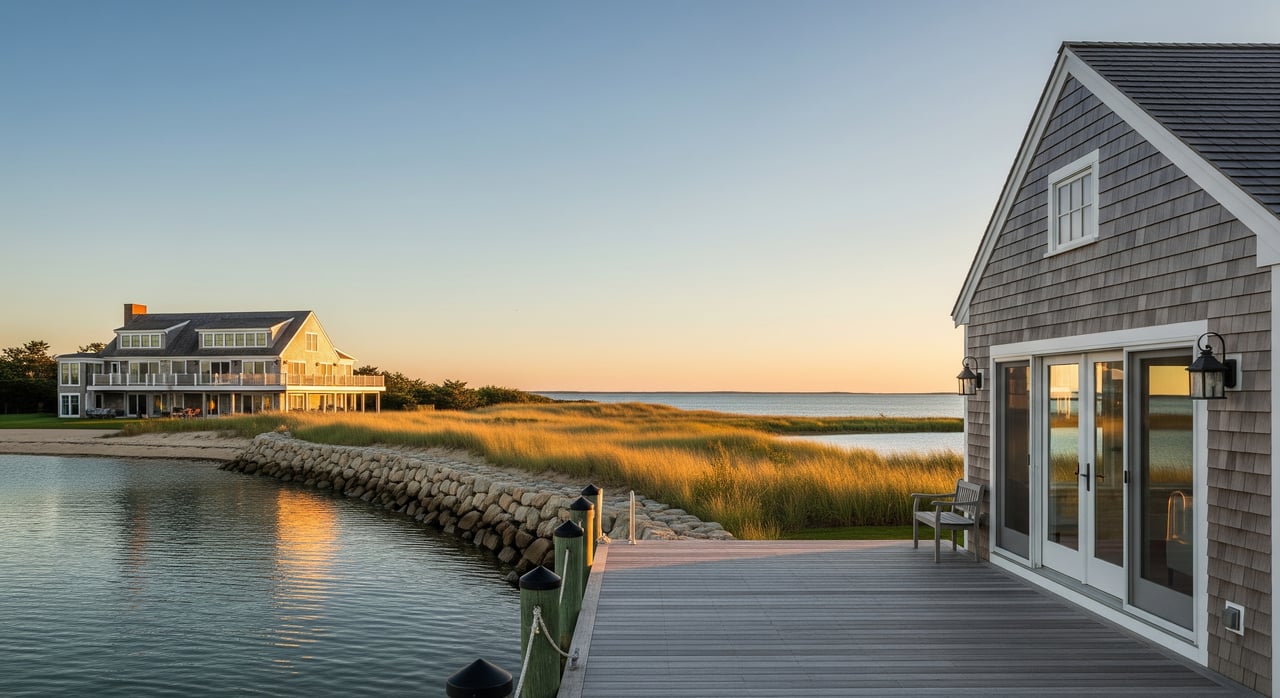
In Orleans, a true waterfront property has direct frontage on the water with immediate access from your lot. That can mean a beach, bulkhead, private dock, or stairs to the sand. You see this on Atlantic-facing Nauset Beach lots, around Rock Harbor and Skaket Beach on Cape Cod Bay, and along Pleasant Bay’s inlets and estuaries.
Waterfront settings vary by shoreline type:
- Atlantic-facing Nauset Beach offers surf energy and wide horizons.
- Protected bay and harbor areas like Skaket and Rock Harbor bring calmer water, dramatic tides, and boat activity.
- Salt marsh and estuary edges near Little Pleasant Bay and Pleasant Bay offer dynamic, changing views tied to tide and vegetation.
What is a waterview home?
A waterview home sits off the shoreline on higher ground. You get the visual drama without direct, on-lot access to the water. In Orleans, these homes often perch on upland, dune crests, bluffs, or wooded rises. Views can be panoramic over Cape Cod Bay or framed across salt marsh and estuary channels.
You may still be close to beaches or marinas, but access typically involves public paths, streets, or private easements.
Lifestyle tradeoffs to consider
Water access and recreation
- Waterfront: Best if you want daily boating, paddling, swimming, or a private beach experience. Some parcels can support docks or stairs to shore, subject to permitting and site conditions.
- Waterview: Ideal if you prioritize the vista more than frequent water use. You can still reach beaches and marinas nearby, just not directly from the lot.
Practical note: Moorings, docks, and slips are limited and managed locally, so availability and feasibility vary by location and depth.
Privacy and space
- Waterfront: Lots are often smaller and closer to neighbors. Expect more foot traffic near public beaches and harbor areas.
- Waterview: Elevated setbacks and wooded buffers can increase seclusion and control over sightlines.
Noise, activity, and seasonality
- Waterfront: You will feel the season. Beach crowds, boat traffic, and harbor restaurants bring energy and noise. Atlantic surf adds a constant soundscape.
- Waterview: The vista remains, but you are a step removed from daily activity and public paths.
Entertaining and logistics
- Waterfront: Incredible event settings, yet parcel size and regulations can limit additions, guest spaces, or amplified gatherings.
- Waterview: Larger upland lots often allow easier parking, service access, and potential for secondary structures, subject to local permitting.
Risk, permits, and maintenance to know
Flooding and erosion
Orleans’ coastlines face storm surge, tidal flooding, and long-term sea level rise. Dunes and bluffs can erode, and shoreline protection systems have finite lifespans. Review current FEMA flood maps and sea level projections when assessing exposure.
Insurance realities
- Waterfront: Typically higher flood and wind premiums if located in mapped flood zones. Elevation, prior losses, and construction details influence rates.
- Waterview: Elevated lots above base flood elevation usually see lower flood premiums, yet coastal wind and salt exposure still apply.
Permits and shoreline rights
In Massachusetts, areas below mean high water carry public rights for fishing, fowling, and navigation. Structures in or near tidelands and tidal wetlands require careful permitting that can include local Conservation Commission approvals and state-level licensing. Private docks may be limited or impractical in shallow or sensitive areas.
Septic and Title 5
Most transfers require Title 5 compliance. Coastal soils, groundwater, and wetlands setbacks can constrain system upgrades or replacements. In sensitive watersheds, enhanced treatment systems may be needed, so plan for feasibility and cost.
Structural and upkeep burdens
Salt air accelerates corrosion on metalwork, roofing, and mechanicals. Seawalls, bulkheads, and riprap require periodic inspection and repair. Expect higher ongoing maintenance budgets for direct waterfront.
Zoning and building codes
Local bylaws and building codes work alongside FEMA elevation requirements in mapped flood zones. Setbacks, height limits, and freeboard rules can impact remodels or expansions, especially on smaller waterfront parcels.
Value and resale in Orleans
Value drivers
Waterfront commands a premium for direct access, private docking potential, and lifestyle. That premium comes with higher ownership costs tied to insurance, maintenance, and regulatory complexity. Waterview homes offer visual drama with fewer coastal constraints, which can broaden appeal and lower recurring expenses.
Liquidity and buyer pool
- Waterfront: Supply is limited and can support strong pricing. The buyer pool is more specific, focused on direct access. Sites with significant exposure risks may see tempered demand unless mitigated.
- Waterview: Broader buyer pool that spans second-home seekers, retirees, and year-round owners who want the Cape Cod view without the surf-at-your-door tradeoffs. That breadth can aid resale in softer markets.
Timing and seasonality
Orleans is a seasonal market with summer visibility driving demand. Pricing is highly local, so a comparative market analysis is essential. When comparing opportunities, weigh total cost of ownership, not just the purchase price.
Decision framework: which fits your goals?
Ask yourself:
- Do you want direct, daily water access, or will a spectacular view satisfy your lifestyle?
- How important are privacy and buffer from seasonal crowds?
- What level of maintenance and insurance cost feels comfortable long term?
- Are you planning to remodel or expand, and will permits likely allow it on the parcel type you prefer?
Pre-tour checklist: what to request in advance
Ask the seller or listing agent for:
- Current FEMA flood zone information and any Elevation Certificate
- A survey showing mean high water, boundaries, and easements
- Engineering reports on seawalls, bulkheads, or foundations
- Permit records for docks, stairs, shoreline work, moorings, or any enforcement items
- Maintenance histories for docks, stairs, seawalls, septic, HVAC, and roofing
- Insurance loss history and recent quotes for flood and wind coverage
- A title report noting tidal lands, easements, or public access rights
On-site inspection priorities
- Elevation relative to mean high water and distance to shore
- Condition of shoreline protections and dune or bluff stability
- Signs of past flooding, staining, rot, or foundation movement
- Access points to the water and proximity to public paths or beaches
- Vegetation and sightlines that could affect current or future views
- Septic system location, age, and proximity to wetlands
Professionals to engage early
- Coastal engineer or marine contractor for seawall and dock feasibility
- Real property attorney experienced with coastal easements and licensing
- Licensed surveyor to confirm boundaries and mean high water
- Insurance broker with coastal expertise to model premiums and options
- Building consultant to estimate flood-proofing, elevation, or rebuild costs
Waterfront vs. waterview at a glance
- Choose waterfront if you want immediate water access, are comfortable with higher upkeep, and accept tighter permitting and privacy tradeoffs.
- Choose waterview if your top priority is the view with more privacy, lower ongoing costs, and greater flexibility for site planning.
Your next step on the Lower Cape
The right choice balances lifestyle, site constraints, and long-term value. If you want a confident, data-driven path to your Orleans home, let’s talk about your goals, review the right documents upfront, and build a smart touring plan. Connect with Christa Zevitas for curated opportunities and disciplined due diligence.
FAQs
What defines true waterfront in Orleans real estate?
- A property that directly abuts the water with immediate access from the lot, such as a beach, dock, bulkhead, or stairs to the shore.
Are waterview homes in Orleans usually in flood zones?
- Many elevated waterview homes sit above base flood elevations, which can reduce flood risk and insurance needs, but site-specific verification is essential.
Can I add a private dock on Pleasant Bay or Rock Harbor?
- Dock feasibility depends on water depth, environmental sensitivity, and multi-layer permitting, so it requires expert review and may not be practical in all areas.
How do Title 5 septic rules affect waterfront purchases in Orleans?
- Most transfers require Title 5 compliance, and coastal constraints can complicate repairs or upgrades, including potential needs for enhanced treatment systems.
Do waterfront homes in Orleans cost more to insure than waterview homes?
- Waterfront properties often carry higher flood and wind premiums due to exposure and elevation, while elevated waterview homes may see lower flood costs.