If you are craving a simpler chapter by the water, South Yarmouth deserves a close look. Downsizing here is not just about moving into less space. It is about finding a home that fits your daily life, your budget, and the amount of upkeep you actually want. If you are weighing that next move on Cape Cod, this guide will help you compare your options and plan with more confidence. Let’s dive in.
Why South Yarmouth fits downsizers
South Yarmouth sits within a town that already aligns well with smaller households and later-life moves. Yarmouth has just over 25,200 year-round residents, a median age of 54.6, and an average household size of 2.08 people. Census data also shows that 35% of residents are age 65 or older.
That matters because downsizing often works best in places where smaller homes, year-round services, and practical support already exist. Yarmouth has also made age-friendly planning a visible priority through initiatives focused on housing, transportation, outdoor spaces, and community support. Its recently adopted comprehensive plan also ties together housing, town services, recreation, transportation, and coastal resiliency.
For many buyers, that creates a reassuring backdrop. You are not trying to force a retirement or empty-nest lifestyle into a town that was never built for it. You are considering a community that already recognizes those needs.
Compare home types in South Yarmouth
One of the most useful ways to think about downsizing in South Yarmouth is to focus less on square footage and more on maintenance. The local housing stock gives you a few realistic paths, and each one comes with a different balance of freedom, responsibility, and monthly cost.
The town’s housing mix is still mostly single-family. About 81% of housing is single-family, while about 19% is multifamily. Condo and apartment types make up about 12% of residential properties, and duplex or triplex homes account for about 7%.
Condos for lower exterior upkeep
If your goal is to reduce chores and simplify ownership, condos are often the clearest option. In practical terms, they can shift some exterior responsibilities away from you, which may mean less worry about roofs, siding, landscaping, snow removal, and other seasonal work.
That convenience usually comes with tradeoffs. Monthly HOA dues can add to your carrying costs, and you may have less control over exterior choices or shared rules. For many downsizers, though, the appeal is simple: fewer moving parts and a more predictable maintenance routine.
Small detached homes for control
A compact detached home can be a strong middle ground if you still want privacy and autonomy. Because much of Yarmouth’s housing was built in the mid-20th century, smaller one-level homes are a plausible fit in the local market, even though the town data does not break ranch homes into a separate category.
This option often gives you more control over your property and monthly decisions. At the same time, it usually means you remain responsible for the full list of homeownership tasks, including lawn care, snow removal, roof upkeep, exterior repairs, and seasonal preparation.
Cottages for coastal charm
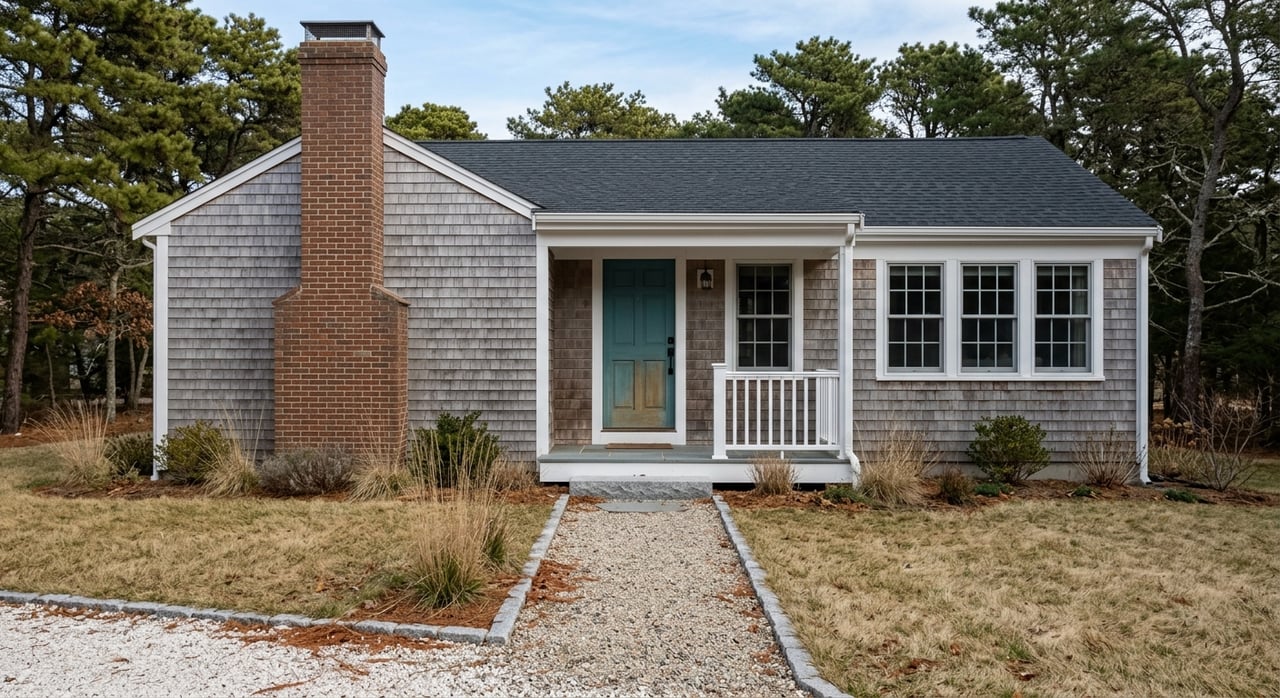
Older cottage-scale homes can be appealing if you want a smaller footprint with classic Cape character. With about 30% of homes in Yarmouth classified as seasonal, cottages are a meaningful part of the local housing story.
Still, charm can come with extra work. Depending on the property, you may need to think more carefully about insulation, winterization, drainage, and off-season upkeep. A cottage may feel wonderfully manageable in size while asking more of you in maintenance.
Think in terms of maintenance burden
When buyers picture downsizing, they often start with bedrooms and square feet. In South Yarmouth, the better starting point is often the weekly and seasonal workload that comes with the property.
Ask yourself what you want to stop doing. If you are tired of managing exterior projects, a condo may be the easiest path. If you still want a yard or more privacy, a small detached home may be worth the extra responsibility. If you love the feel of an older coastal cottage, make sure you are equally comfortable with the upkeep that may come with it.
A smaller home does not always mean a simpler home. The best downsizing move is the one that reduces stress, not just space.
Daily convenience in South Yarmouth
For many downsizers, convenience matters as much as the house itself. South Yarmouth offers several practical advantages if you want to cut down on long drives and keep essential services within reach.
Transportation is one of the town’s strongest assets. Yarmouth says transportation is available seven days a week for common trips like banking, grocery shopping, pharmacy visits, dental and medical appointments, shopping, and trips to the Senior Center. Rides need to be scheduled 48 hours in advance, and town pages also reference CCRTA DART and hospital bus options.
Year-round bus service is another plus. The broader town transportation page notes that CCRTA provides year-round local bus service on major Cape Cod routes. That does not mean every errand becomes car-free, but it does mean you may be able to avoid more driving than you expect.
Walkable areas are selective
It is important to be realistic about walkability. South Yarmouth is not a place where you should assume every area works well on foot.
Instead, walkability is a local planning goal centered in specific village-style areas. The Village Centers Overlay District was created to encourage features such as sidewalks, pedestrian-level lighting, street trees, reduced curb cuts, and a mix of residential and commercial uses. Town planning materials specifically highlight South Yarmouth Village near Bass River and the Long Pond and Route 28 intersection.
If walking access is part of your downsizing plan, location matters a great deal. A home in or near one of these village-oriented areas may support a more convenient daily routine than a home farther from those centers.
Recreation and everyday quality of life
Downsizing on Cape Cod is also about how you want your days to feel. South Yarmouth offers a mix of coastal access and easy recreation that can make smaller-home living feel bigger in all the right ways.
Windmill Beach in South Yarmouth is a small beach off River Street with benches and parking. The town notes that it does not have lifeguards or facilities, which is useful to know if you are comparing beach access points. Freshwater spots such as Long Pond, Flax Pond, and Sandy Pond add more outdoor options, each with different amenity levels.
The Cape Cod Rail Trail is another practical lifestyle advantage. The town says phases 1 and 2 through Yarmouth are complete, and the extension includes a trailhead east of Station Avenue in South Yarmouth with 97 parking spaces. For buyers who want easier recreation without a lot of planning, that kind of access can be a real benefit.
Budget beyond the purchase price
A downsizing move only feels easier if the monthly numbers truly work. South Yarmouth buyers should look beyond sale price and compare all carrying costs before deciding which type of home makes the most sense.
Census QuickFacts reports a median owner-occupied home value in Yarmouth of $551,800. Median monthly owner costs are reported at $2,230 with a mortgage and $888 without one. Median gross rent is $1,721.
Those broad numbers are helpful, but your real budget may also include costs that vary by property type and location.
Costs to compare carefully
Before you choose a condo, detached home, or cottage, compare items such as:
- HOA fees for shared maintenance and amenities
- Flood insurance, when needed
- Routine exterior maintenance and repairs
- Winterization for seasonal or older homes
- Landscaping and snow removal
- Utility costs tied to age and condition of the home
- Beach parking or recreation-related expenses that matter to your lifestyle
Massachusetts also offers programs that may matter to qualifying older homeowners. The state’s senior circuit breaker tax credit and Clause 41A property tax deferral are both worth reviewing if you are planning a retirement-focused move.
Coastal risk should stay front and center
Any move near the water should include a clear look at flood and erosion risk. Yarmouth notes that its roughly 40 miles of saltwater shoreline leave the town vulnerable to flooding and coastal erosion.
The town has adopted FEMA flood maps, and it also notes an important point that many buyers miss: properties outside special flood-hazard areas can still face risk. That means you should not treat a non-flood-zone label as the end of the conversation.
What to check before you buy
If you are considering downsizing into a coastal or near-coastal property, take time to review:
- The property’s current flood zone status using the official FEMA Flood Map Service Center
- Whether flood insurance may be required or advisable
- Signs of drainage issues on the site
- Exposure to erosion or stormwater impacts
- The age and resilience of major systems and exterior materials
- Seasonal maintenance demands tied to the property’s location
This is where careful, local due diligence matters. A home can look simple on paper but carry very different risks and operating costs depending on where it sits.
Local support can make the move easier
One of South Yarmouth’s most practical strengths is that support for older adults is not treated like an afterthought. Yarmouth Senior Services says its mission is to support adults age 60 and older and their families.
Its outreach includes help with housing, fuel assistance, SHINE counseling, legal services, health care proxies, lock-box assistance, and other practical support. The Senior Center is a multi-purpose drop-in center in South Yarmouth. For buyers planning not just a move, but a sustainable next chapter, that kind of local infrastructure can be meaningful.
Health access is another part of the equation. Cape Cod Hospital in Hyannis is a non-profit community hospital with 269 staffed beds and is affiliated with Cape Cod Healthcare. For regional travel and connections, the town also notes access to Cape Cod Gateway Airport in Hyannis and year-round ferry service from Hyannis to Nantucket and Martha’s Vineyard.
How to choose the right downsizing path
If you are deciding whether South Yarmouth is the right place to simplify, start by matching the home type to the life you want, not just the budget you can support. Think through how often you want to drive, how much exterior work you are willing to manage, and whether coastal risk changes your comfort level with certain locations.
For some buyers, the best answer will be a condo that trades yard work for monthly fees. For others, it will be a compact detached home that offers privacy and one-level living. And for buyers drawn to Cape character, an older cottage may still be the right fit, as long as you go in with a clear understanding of maintenance and seasonal demands.
In a market like South Yarmouth, downsizing can absolutely mean living easier. The key is choosing a property that supports the life you want to lead year-round, with fewer surprises after closing.
If you are thinking about downsizing on Cape Cod, Christa Zevitas offers thoughtful buyer guidance, local market insight, and the kind of careful due diligence that helps you move forward with confidence.
FAQs
What makes South Yarmouth appealing for downsizing?
- South Yarmouth sits in a town with an older median age, smaller average household size, age-friendly planning goals, year-round services, and practical support systems that can help make a lower-stress move more realistic.
What is the easiest home type to maintain in South Yarmouth?
- In general, condos are the lowest-maintenance option because some exterior responsibilities may be handled through HOA structures, while small detached homes and older cottages usually leave more upkeep in your hands.
How walkable is South Yarmouth for downsizers?
- Walkability depends heavily on location, since the town treats it as a village-center planning goal rather than a townwide condition, with South Yarmouth Village and the Long Pond and Route 28 area specifically noted in local planning materials.
What local transportation options are available in Yarmouth?
- Yarmouth offers transportation seven days a week for common errands and appointments with advance scheduling, and the town also references CCRTA DART, hospital bus options, and year-round local bus service on major Cape routes.
What extra costs should downsizers budget for in South Yarmouth?
- Beyond the purchase price, you should compare HOA dues, flood insurance, winterization, landscaping, snow removal, utility costs, and ongoing maintenance because these items can significantly affect your monthly budget.
How should buyers check flood risk for a South Yarmouth property?
- Buyers should review the property through the official FEMA Flood Map Service Center and also ask questions about drainage, erosion exposure, stormwater impacts, and whether flood insurance may still be advisable even outside a special flood-hazard area.